
This Week in AI: Week of 26th October 2025


This week, the AI race shifted from the cloud to the desktop and the browser, with massive hardware deals and major software rollouts. We saw a new level of competition in on-device AI and the battle to own the user’s workflow. Here’s everything you need to know!
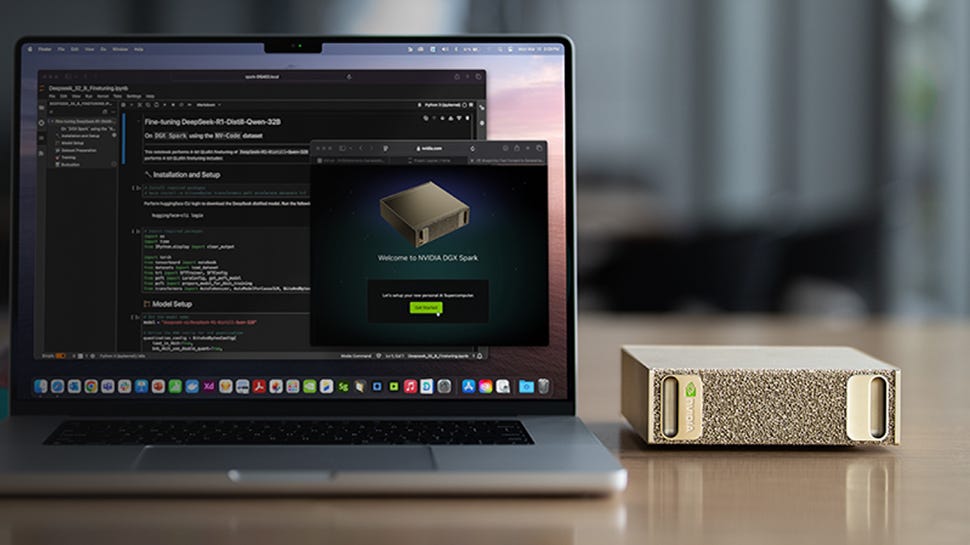
NVIDIA’s “Personal AI Supercomputer” DGX Spark Goes on Sale
Here’s What You Need to Know:
NVIDIA has launched the DGX Spark, a compact, desktop-sized AI supercomputer powered by its new Grace Blackwell Superchip. The system delivers 1 Petaflop of AI compute performance and 128 GB of unified memory, enabling researchers and developers to fine-tune and run large language models (LLMs) up to 200 billion parameters locally, bypassing the need for cloud queues.
Why It’s Important for AI Professionals:
The DGX Spark democratizes access to massive model development. For data scientists and researchers, this means faster iteration cycles, no more waiting for cloud instance availability or paying steep egress fees. It allows for highly sensitive or proprietary data to be kept and processed securely on-premise. This shift from “cloud-only” to “desktop-capable” with such large models will accelerate experimentation and fine-tuning across the industry.
Why It Matters for Everyone Else:
This is a win for enterprise security and product development. Companies can now develop and secure their most valuable AI intellectual property (the trained models and data) internally. It also enables smaller, well-funded startups and university labs to compete with tech giants by accessing serious compute power without building a massive data center. This will drive faster, more diverse AI innovation across all sectors.
Aish’s Prediction:
This is the clearest signal yet that the next wave of AI innovation will happen locally, not just in the cloud. Democratizing compute at this scale allows startups, researchers, and even individuals to experiment with frontier models without waiting in GPU queues. It also unlocks more privacy-first development, training models where the data resides. Soon we’ll see a new generation of “AI labs” running entirely from compact workstations- universities, small companies, and creators building fine-tuned local models for specialized use cases like robotics, biotech, and creative design.
Anthropic Secures Massive AI Chip Deal with Google

Here’s What You Need to Know:
Anthropic and Google Cloud have announced a massive, multi-billion-dollar deal that significantly expands Anthropic’s access to Google’s Tensor Processing Unit (TPU) chips. This partnership aims to provide Anthropic with over a gigawatt of computing capacity by 2026, allowing it to rapidly scale the training and running of its next-generation Claude models. The deal further deepens the strategic alliance between the two companies.
Why It’s Important for AI Professionals:
This deal underscores the vital role of specialized hardware (like Google’s TPUs) in the AI arms race. For engineers at Anthropic, this guarantees the necessary compute scale to train models far exceeding the current size and complexity, enabling breakthroughs in core safety and performance. For the wider AI community, it signals that leading model developers are moving toward a multi-platform, multi-chip strategy, reducing over-reliance on a single supplier like NVIDIA.
Why It Matters for Everyone Else:
This massive commitment to compute power is an indicator of Anthropic’s ambition to be the safest and most powerful AI option for enterprise. For businesses, this means the Claude family of models will continue to evolve rapidly, leading to highly reliable and powerful AI tools available through Google Cloud. This aggressive investment ultimately benefits consumers by driving competition and pushing the boundaries of what AI can do responsibly.
Aish’s Prediction:
This deal isn’t just about compute; it’s about control. Anthropic is scaling its infrastructure to match the ambition of frontier model research, but it’s also doubling down on dependency with a single cloud provider. It’s a smart short-term play for speed, but long-term resilience will come from multi-cloud or hybrid compute strategies. We’re heading toward a future where foundation model labs are not defined by who has the biggest model, but who has the most efficient compute pipeline- blending GPUs, TPUs, and custom silicon optimized for inference cost and latency.
Google Revamps AI Studio with New Features for Vibe Coding
Here’s What You Need to Know:
Google has revamped its AI Studio platform with new features centered around “Vibe Coding.” This new approach is designed to simplify the development of AI-first applications, allowing users to move from a natural language prompt—the “vibe”—to a functional, shareable app in a much faster, conversational loop. It uses the Gemini 2.5 Pro model to power this rapid prototyping.
Why It’s Important for AI Professionals:
Vibe Coding embodies the future of low-code/no-code AI development. For technical users, it’s a powerful accelerator, enabling rapid prototyping of entire applications (including front-end and back-end logic) with just a few prompts. This fundamentally changes the developer’s role from writing boilerplate code to architecting and refining AI-generated systems, a key concept for AI engineers to master going forward.
Why It Matters for Everyone Else:
This move significantly lowers the barrier to entry for building intelligent software. A business analyst, marketer, or product manager can now create custom internal tools or even minimum viable products (MVPs) without needing a full software engineering team. This democratization of application development will accelerate digital transformation across small and mid-sized businesses who need custom AI solutions but lack deep technical resources.
Aish’s Prediction:
“Vibe Coding” is a great marketing term for what’s essentially an agentic development environment. This is a pivotal shift in how we build. The move from code-first to conversation-first development bridges the gap between ideation and implementation. It’s no longer just about writing logic, it’s about designing intent. The faster loop from “idea” to “app” is going to make product thinking a key skill for everyone working with AI. “Prompt engineering” will soon fade as a standalone role, replaced by AI design, people who can map human intent to system capabilities, blending creativity with engineering intuition.
Introducing ChatGPT Atlas: The Browser with ChatGPT Built In
Here’s What You Need to Know:
OpenAI has launched ChatGPT Atlas, a new web browser built from the ground up with conversational AI at its core. Atlas integrates ChatGPT directly into the browsing experience, enabling users to chat with web pages, use a “memory” feature for personalization, and activate an “Agent Mode” to delegate multi-step tasks like ordering groceries or filling out forms.
Why It’s Important for AI Professionals:
This is a definitive move to capture the user interface layer. For AI developers, the browser is the ultimate agent execution environment. Atlas is a live sandbox for testing out agentic AI—the capability of an AI to autonomously take action on a user’s behalf across multiple websites and applications. This represents a new frontier for AI research centered on reliable action and complex workflow orchestration.
Why It Matters for Everyone Else:
The browser is the gateway to the internet, and by owning it, OpenAI directly challenges Google’s search and Microsoft’s desktop dominance. Atlas is a fundamental redesign of how we interact with the web, turning passive browsing into active task completion. For consumers, this promises a massive productivity boost, but it also introduces new privacy concerns over the AI having “vision” over everything on the screen and the power to take “actions.”
Aish’s Prediction:
This one really my favorite! We’ve seen other players experiment with agentic browsers before, but OpenAI doing it changes the game. They already have one of the most used AI chat platforms- and now, when you connect that with their agentic AI toolkit, custom GPTs, and all the integrations across MCP servers like Figma, Canva, and Booking.com, it becomes a massive ecosystem. Atlas isn’t just a browser, it’s the foundation for a future where you don’t browse the web, you delegate it.
Keep reading with a 7-day free trial
Subscribe to AI with Aish to keep reading this post and get 7 days of free access to the full post archives.